
What Is Geothermal Energy? Geothermal energy is a renewable energy source that uses the Earth’s natural heat to generate electricity and provide heating. Unlike fossil fuels such as coal, oil, and natural gas, geothermal energy comes from the heat stored beneath the Earth’s surface. Because this heat is constantly produced by the Earth, geothermal energy is considered a clean, sustainable, and reliable source of power.
What Is Geothermal Energy is a crucial topic for understanding renewable energy sources in today’s world.
In exploring what is geothermal energy, we find that it plays a vital role in sustainable energy solutions.
As countries work to reduce carbon emissions and transition toward cleaner energy systems, geothermal energy is becoming increasingly important. It provides continuous electricity regardless of weather conditions, making it an excellent complement to solar and wind power.
What Is Geothermal Energy?
The term geothermal comes from two Greek words:
- Geo means Earth.
- Therme means heat.
Together, geothermal energy simply means heat from the Earth.
The knowledge of what is geothermal energy enhances our ability to harness this renewable resource effectively.
Understanding what is geothermal energy is essential for anyone interested in alternative energy sources.
Deep beneath the Earth’s crust lies an enormous amount of thermal energy created by the planet’s formation and the natural decay of radioactive elements. This underground heat warms rocks, underground water, and steam reservoirs. Engineers capture this heat and convert it into electricity or use it directly for heating buildings, greenhouses, and industrial facilities.
How Does Geothermal Energy Work?
Understanding how geothermal energy works is easier when viewed step by step.
- Heat naturally exists deep beneath the Earth’s surface.
- Underground water flows through hot rocks.
- The water becomes extremely hot or changes into steam.
- Wells are drilled to reach these underground reservoirs.
- Hot water or steam rises through production wells.
- Steam spins a turbine connected to a generator.
- The generator produces electricity.
- The cooled water is pumped back underground through injection wells to repeat the cycle.
This closed-loop process allows geothermal power plants to operate efficiently while conserving underground water resources.
The Main Components of a Geothermal System
Every geothermal power system includes several important components.
Heat Source
The heat source is the natural heat deep inside the Earth. It is the starting point of every geothermal system.
Geothermal Reservoir
A geothermal reservoir is an underground area containing hot water, steam, and permeable rocks that store geothermal heat.
Reservoir Rock
What is geothermal energy? It is not just about the heat; it’s about the future of energy production.
Reservoir rocks contain tiny pores and fractures that allow hot water and steam to circulate underground.
Cap Rock
Cap rock is a dense, impermeable rock layer that traps heat, steam, and hot water inside the geothermal reservoir.
Geothermal Wells
Engineers drill production wells to extract hot water and steam, while injection wells return cooled water back into the reservoir.
Types of Geothermal Power Plants
There are three major types of geothermal power plants used worldwide.
Dry Steam Power Plants
Dry steam plants use steam directly from underground reservoirs to turn turbines and generate electricity.
Flash Steam Power Plants
Flash steam plants pump high-pressure hot water to the surface. As pressure drops, part of the water instantly turns into steam that drives turbines.
With the growing need for renewable resources, what is geothermal energy becomes a focal point in discussions.
As we delve deeper into renewable options, we must ask ourselves, what is geothermal energy?
Binary Cycle Power Plants
Binary cycle plants transfer geothermal heat to another liquid with a lower boiling point. The second liquid vaporizes, spins the turbine, and generates electricity. This method produces very low emissions and can operate with lower-temperature geothermal resources.
Advantages of Geothermal Energy
Geothermal energy offers numerous benefits for both people and the environment.
Renewable Energy Source
The Earth’s internal heat is continuously generated, making geothermal energy renewable when managed responsibly.
Low Carbon Emissions
Geothermal power plants release significantly fewer greenhouse gases than coal or natural gas power stations.
Reliable 24/7 Power
Unlike solar panels and wind turbines, geothermal plants produce electricity day and night regardless of weather conditions.
Small Land Footprint
Geothermal facilities require relatively little land compared to many other renewable energy technologies.
Stable Energy Costs
Since geothermal energy does not rely on fuel purchases, electricity prices remain more stable over time
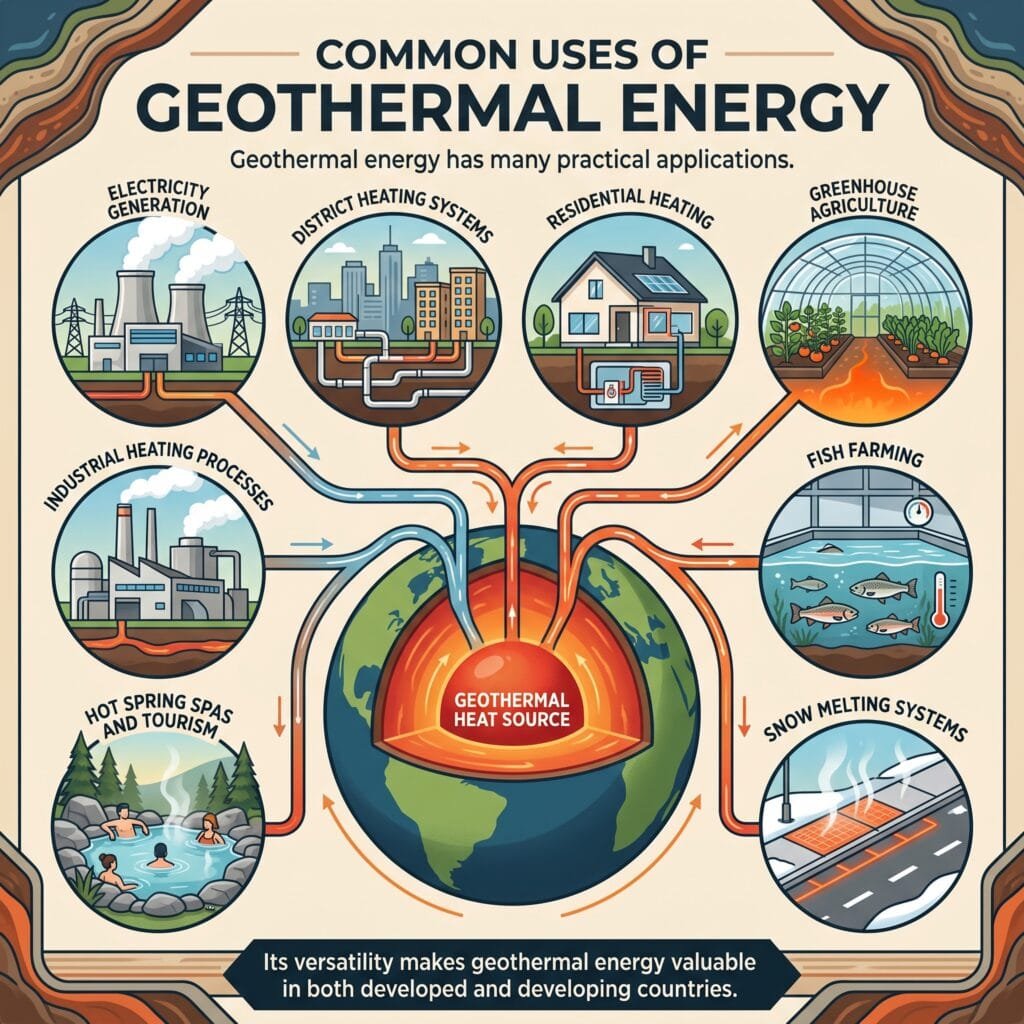
Common Uses of Geothermal Energy
Geothermal energy has many practical applications.
- Electricity generation
- District heating systems
- Residential heating
- Greenhouse agriculture
- Fish farming
- Industrial heating processes
- Hot spring spas and tourism
- Snow melting systems for roads and sidewalks
Its versatility makes geothermal energy valuable in both developed and developing countries.
Challenges of Geothermal Energy
Although geothermal energy has many advantages, it also has some limitations.
High Initial Costs
Exploration, drilling, and plant construction require significant investment.
Limited Suitable Locations
High-quality geothermal resources are concentrated in volcanic and tectonically active regions.
Exploration Risk
Not every drilling project successfully discovers productive geothermal reservoirs.
Resource Management
Poor management can reduce reservoir pressure over time, although proper reinjection techniques help maintain long-term sustainability.
Countries Leading in Geothermal Energy
Several countries have become global leaders in geothermal development.
Identifying what is geothermal energy helps in understanding its impact on the energy sector.
Comprehending what is geothermal energy can lead to innovative solutions for energy production.
- United States
- Iceland
- Indonesia
- Philippines
- Kenya
- New Zealand
- Italy
- Turkey
- Mexico
- Japan
Iceland is especially famous because a large percentage of its homes receive heating from geothermal energy.
Geothermal Energy and Climate Change
One of the biggest advantages of geothermal energy is its role in reducing greenhouse gas emissions.
Replacing fossil fuel power plants with geothermal electricity can:
- Reduce carbon dioxide emissions.
- Improve air quality.
- Increase energy security.
- Support long-term climate goals.
- Provide dependable renewable electricity throughout the year.
In light of recent developments, what is geothermal energy remains a topic of interest among scientists.
As governments invest in clean energy technologies, geothermal energy will continue to play an important role in global decarbonization.
When discussing renewable energy, it is crucial to understand what is geothermal energy.
Countries leading in renewable initiatives highlight what is geothermal energy in their strategies.
The Future of Geothermal Energy
New technologies are expanding geothermal opportunities beyond traditional volcanic regions.
Enhanced Geothermal Systems (EGS), advanced drilling methods, artificial intelligence, and improved reservoir management are helping engineers access deeper geothermal resources. These innovations could dramatically increase the amount of geothermal electricity produced worldwide over the coming decades.
Because geothermal energy provides constant, low-carbon electricity, many experts believe it will become an increasingly important part of the global renewable energy mix.
Conclusion
What Is Geothermal Energy? What Is Geothermal Energy is the natural heat stored beneath the Earth’s surface that can be used to generate electricity and provide heating. As one of the most reliable renewable energy sources, What Is Geothermal Energy offers continuous power, low greenhouse gas emissions, and long-term sustainability. Although development requires significant investment and suitable geological conditions, What Is Geothermal Energy remains a key solution for meeting future energy demands while protecting the environment.
Discussing what is geothermal energy can open doors to new technological advancements.
The implications of what is geothermal energy are profound in the context of climate change.
In conclusion, what is geothermal energy is essential for future energy solutions.Contact https://en.wikipedia.org/wiki/Natural_resource