
Introduction
Marine Biotechnology for Biofuels is an emerging field that combines marine biology, biotechnology, microbiology, chemistry, and engineering to investigate renewable fuels derived from marine biological resources. Microalgae, macroalgae or seaweed, and marine microorganisms contain lipids, carbohydrates, proteins, and other organic compounds that can potentially be transformed into different forms of bioenergy.
Scientists are particularly interested in marine algae because some species grow rapidly, can use saline water, and do not necessarily require productive agricultural land. Depending on their biochemical composition and the conversion technology used, marine biomass can contribute to biodiesel, bioethanol, biogas, biohydrogen, bio-oil, and potentially advanced transportation fuels.
Research nevertheless shows an important distinction between technical potential and commercial readiness. Marine microalgal biofuels remain constrained by cultivation costs, harvesting, downstream processing, energy requirements, and difficulties in scaling laboratory technologies to industrial production.
How Marine Biotechnology for Biofuels Works
Marine Biotechnology for Biofuels generally begins with selecting marine organisms that contain desirable biochemical characteristics.
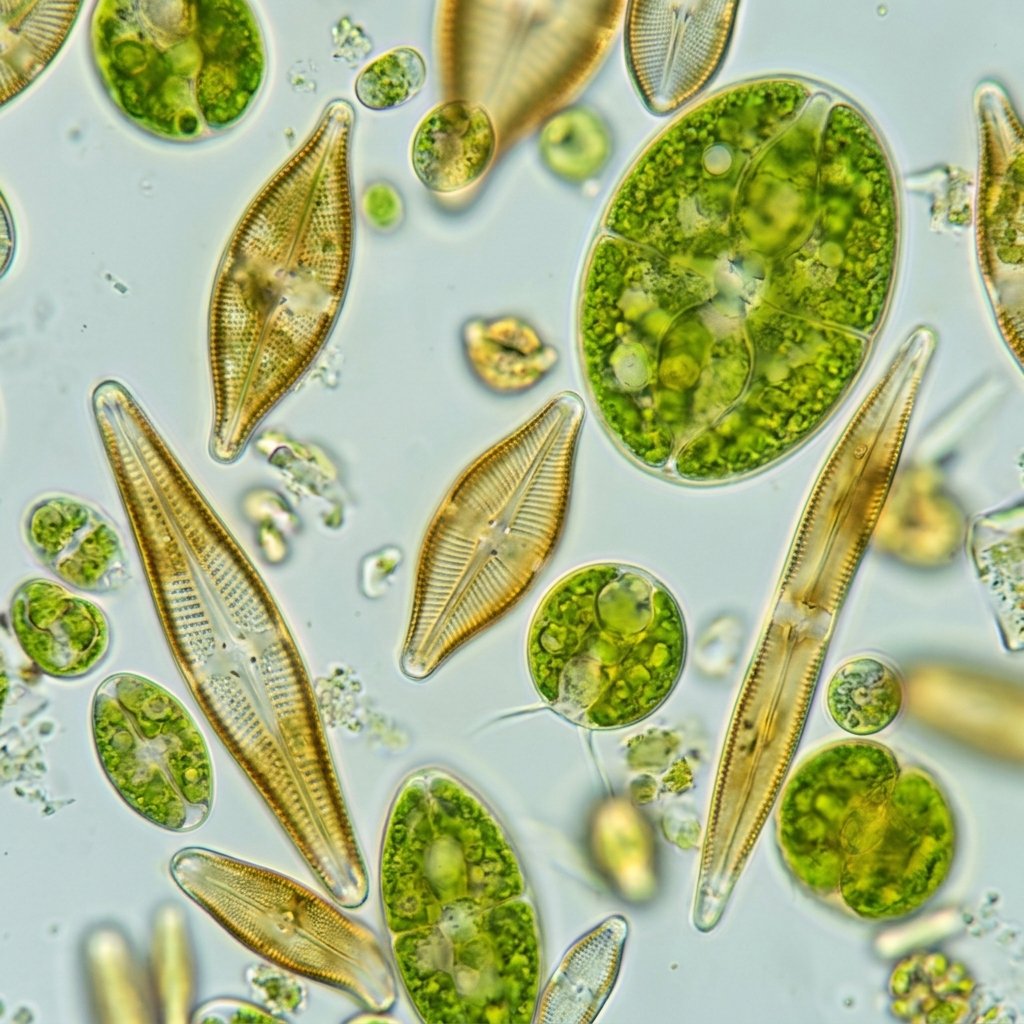
Microalgae use photosynthesis to convert light energy, carbon dioxide, water, and nutrients into biomass. Depending on the species and environmental conditions, this biomass may contain substantial quantities of lipids or carbohydrates.
After cultivation, the biomass must be harvested and processed. Different components can then follow different conversion pathways.
Lipids can be converted into biodiesel, carbohydrates can provide substrates for fermentation into alcohol fuels, and whole or residual biomass can potentially undergo anaerobic digestion or thermochemical conversion.
Biotechnology contributes through strain selection, genomics, metabolic engineering, cultivation optimization, improved harvesting methods, and more efficient conversion processes. Recent research is exploring genetic and metabolic tools to improve lipid productivity and stress tolerance in microalgae.
Microalgae as Biofuel Resources
Microalgae are among the most extensively studied marine biotechnology resources for renewable fuel production.
Unlike conventional energy crops, microalgae do not necessarily depend on fertile farmland. Marine and salt-tolerant strains can potentially be cultivated in saline environments, although cultivation systems still require careful management of water, nutrients, temperature, light, contamination, and carbon supply.
Microalgae are especially attractive because their biomass can contain several useful components rather than only one fuel precursor.
Lipids may support biodiesel production, carbohydrates can be fermented, and remaining organic material can potentially contribute to biogas or other products.
This versatility has encouraged researchers to move toward integrated systems in which most of the harvested biomass is utilized rather than discarded.
Biodiesel from Marine Microalgae
Biodiesel is one of the best-known applications of microalgal biotechnology.
Certain microalgae can accumulate lipids inside their cells. After cultivation and harvesting, these lipids can be extracted and chemically converted into biodiesel.
Biotechnology can help researchers identify high-lipid strains and manipulate environmental conditions to influence lipid accumulation. Modern genetic and metabolic engineering approaches are also being investigated to increase productivity.
However, producing high lipid concentrations in a laboratory does not guarantee economical fuel production.
Large-scale cultivation requires infrastructure, nutrients, carbon supply, water circulation, harvesting, dewatering, extraction, and fuel processing. Each stage requires resources and energy.
Consequently, the entire production system must be evaluated rather than considering lipid yield alone.
Marine Algae for Bioethanol
Bioethanol provides another potential pathway.
Many algae contain carbohydrates that can be converted into fermentable sugars. Microorganisms such as selected yeasts or bacteria can subsequently convert suitable sugars into ethanol.
Macroalgae, commonly known as seaweed, are particularly interesting because some species contain substantial carbohydrate fractions.
Unlike terrestrial woody biomass, seaweed has a different structural composition and generally contains little or no lignin, potentially offering advantages for some processing routes.
However, marine carbohydrates vary among species. Efficient conversion may require specialized enzymes and microorganisms capable of processing particular sugars.
Biotechnology can therefore contribute by developing improved enzymes, fermentation organisms, and conversion systems.
Biogas from Marine Biomass
Marine biomass can also be investigated for anaerobic digestion.
During this process, communities of microorganisms break down biodegradable material without oxygen and produce biogas containing primarily methane and carbon dioxide.
Seaweed and residual microalgal biomass can potentially provide organic feedstocks for digestion.
One advantage is that anaerobic digestion can process relatively wet material. This is important because algae contain substantial quantities of water, and complete drying can consume significant energy.
Challenges remain. Salinity, feedstock composition, seasonal variation, and inhibitory compounds can influence microbial activity and methane yields.
Marine Biohydrogen
Biohydrogen represents a less mature but scientifically interesting application of marine biotechnology.
Certain algae and microorganisms can generate hydrogen under specific biological conditions. Scientists are studying their metabolic pathways to understand how hydrogen production might be increased and maintained.
Biotechnology could potentially modify metabolic processes, improve strains, and optimize photobiological or fermentation systems.
At present, biological hydrogen production faces significant efficiency, stability, reactor-design, and scale-up challenges. It should therefore be regarded primarily as an active research field, rather than an established large-scale commercial marine biofuel technology.
Bio-Oil and Thermochemical Conversion
Marine biomass can also undergo thermochemical processing.
Technologies such as pyrolysis and hydrothermal liquefaction (HTL) can transform biomass into energy-rich products. HTL is particularly interesting for algae because it can process wet biomass under elevated temperature and pressure, potentially reducing the need for complete drying.
The resulting bio-crude generally requires additional upgrading before it can function as a practical transportation fuel.
Researchers therefore study catalysts, reaction conditions, energy requirements, product quality, and methods for recovering nutrients from processing streams.
The Marine Biorefinery Concept
One of the most important developments in Marine Biotechnology for Biofuels is the move toward integrated biorefineries.
Producing microalgae exclusively for a relatively low-value fuel has often struggled economically. Research therefore increasingly considers systems that generate several products from the same biomass.
High-value pigments, proteins, chemicals, nutrients, or biomaterials might be recovered alongside fuel production. Residual biomass could then be processed for energy or other applications.
Recent research describes marine microalgae as potential circular biofactories, combining fuel production with carbon utilization, nutrient recycling, wastewater treatment, and valuable coproducts. This integrated approach may improve both resource efficiency and economic performance.
Environmental Benefits and Limitations
Marine biofuels have potential environmental advantages, but they should not automatically be described as carbon-neutral.
Algae absorb carbon dioxide while growing, and some systems can potentially use non-potable water or integrate with nutrient-rich waste streams.
However, cultivation equipment, fertilizers, electricity, pumping, harvesting, dewatering, drying, extraction, transportation, and fuel conversion can all generate environmental impacts.
Life-cycle studies of algal biofuels have historically produced widely different results depending on technology, location, assumptions, energy sources, productivity, and coproduct allocation.
Therefore, life-cycle assessment (LCA) and techno-economic assessment (TEA) are essential for determining whether a specific marine biofuel system actually provides environmental and economic advantages.
Challenges Facing Commercial Production
Large-scale commercialization remains one of the greatest challenges.
Microalgal cultures can be dilute, making biomass harvesting expensive and energy-intensive. Maintaining suitable growth conditions at industrial scale is also more difficult than demonstrating growth in controlled laboratory experiments.
Other challenges include contamination, nutrient requirements, photobioreactor costs, water management, biomass dewatering, extraction efficiency, and reliable year-round productivity.
Recent research continues to identify system integration and scalability—not merely biological capability—as central barriers to commercial marine microalgal fuels.
Future of Marine Biotechnology for Biofuels
The future of Marine Biotechnology for Biofuels will likely depend on combining biological improvement with better engineering.
Researchers are investigating advanced photobioreactors, low-energy harvesting, metabolic engineering, genome-editing techniques, improved conversion technologies, nutrient recycling, wastewater integration, and multiproduct biorefineries.
Rather than expecting one marine organism to replace petroleum directly, future systems may combine several processes and products.
The strongest opportunities may emerge where biofuel production is integrated with higher-value materials, carbon utilization, waste treatment, and nutrient recovery.
Conclusion
Marine Biotechnology for Biofuels offers a scientifically promising route for converting microalgae, seaweed, and marine microorganisms into renewable energy products.
Marine biomass can potentially support biodiesel, bioethanol, biogas, biohydrogen, and thermochemically produced bio-oils. Biotechnology can improve organisms, cultivation methods, extraction, fermentation, and conversion processes.
Yet significant limitations remain. Commercial success depends on reducing cultivation and harvesting costs, improving energy efficiency, scaling production, recycling nutrients, and demonstrating favorable life-cycle performance.
Marine biofuels should therefore be understood as a developing technology with substantial research potential rather than a proven universal replacement for fossil fuels. Integrated marine biorefineries may provide one of the most practical paths toward making these biological resources economically and environmentally useful.https://www.unesco.org/en/query-list/n/natural-resources