
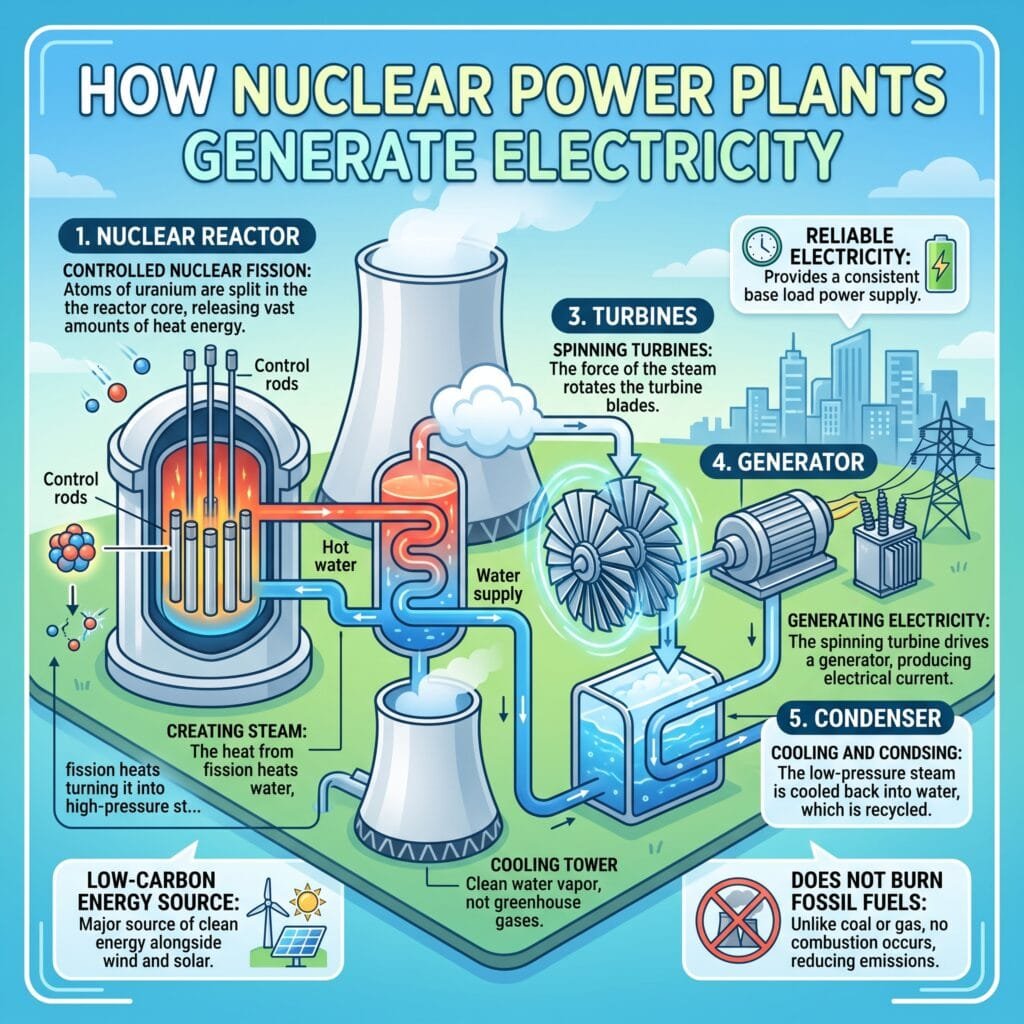
How Nuclear Power Plants Generate Electricity is a common question for anyone interested in energy production and modern power systems. Nuclear power plants generate electricity by using heat released from controlled nuclear fission to produce steam, which spins turbines connected to electrical generators. Unlike coal or natural gas plants, nuclear power plants do not burn fossil fuels during electricity generation, making them a major source of low-carbon energy.
As countries seek reliable and cleaner electricity, nuclear energy continues to play an important role alongside renewable energy sources such as wind, solar, and hydropower. Understanding How Nuclear Power Plants Generate Electricity helps explain why nuclear power remains one of the world’s largest sources of low-carbon electricity.
What Is a Nuclear Power Plant?
A nuclear power plant is a facility that converts nuclear energy into electrical energy. The plant uses a nuclear reactor where atoms of uranium are split in a carefully controlled process called nuclear fission. The heat released during this reaction is used to produce steam that drives large turbines connected to generators.
Although the source of heat is different, many parts of a nuclear power plant operate similarly to conventional thermal power plants that use coal or natural gas.
How Nuclear Power Plants Generate Electricity
The process of How Nuclear Power Plants Generate Electricity involves several carefully controlled steps.
First, uranium fuel is placed inside the nuclear reactor. Inside the reactor, uranium atoms undergo nuclear fission when struck by neutrons. This reaction releases a tremendous amount of heat.
The heat warms water circulating through the reactor system. In most reactor designs, this heat is transferred to another water system where steam is produced.
The high-pressure steam flows toward a steam turbine, causing its blades to rotate at high speed. The spinning turbine is connected to an electrical generator. As the generator rotates, electromagnetic induction converts mechanical energy into electrical energy.How Nuclear Power Plants Generate Electricity
The process of How Nuclear Power Plants Generate Electricity involves several carefully controlled steps.
First, uranium fuel is placed inside the nuclear reactor. Inside the reactor, uranium atoms undergo nuclear fission when struck by neutrons. This reaction releases a tremendous amount of heat.
The heat warms water circulating through the reactor system. In most reactor designs, this heat is transferred to another water system where steam is produced.
The high-pressure steam flows toward a steam turbine, causing its blades to rotate at high speed. The spinning turbine is connected to an electrical generator. As the generator rotates, electromagnetic induction converts mechanical energy into electrical energy.
Main Components of a Nuclear Power Plant
Several major components work together to ensure safe and efficient electricity generation.
Nuclear Reactor
The reactor is the heart of the nuclear power plant. It contains the nuclear fuel where controlled fission reactions occur.
Uranium Fuel Rods
Fuel rods contain uranium fuel pellets that provide the energy needed for nuclear fission. A small amount of uranium can produce an enormous amount of electricity compared to fossil fuels.
Control Rods
Control rods absorb neutrons and regulate the speed of the nuclear reaction. Operators raise or lower these rods to control reactor power or safely shut down the reactor when necessary.
Coolant System
The coolant removes heat from the reactor core and transfers it to the steam generation system.
Steam Generator
In many reactor designs, heat from the reactor converts water into high-pressure steam without mixing radioactive materials with the turbine system.
Steam Turbine
The steam turbine converts the energy of moving steam into mechanical rotational energy.
Electrical Generator
The generator transforms the turbine’s mechanical rotation into electrical energy using electromagnetic induction.
Condenser
The condenser cools steam after it leaves the turbine, converting it back into liquid water for reuse.
Cooling System
Cooling towers or nearby rivers, lakes, or oceans help remove excess heat from the plant while supporting continuous operation.
Step-by-Step Electricity Generation Process
Understanding the complete process makes it easier to see how nuclear energy becomes usable electricity.
- Uranium fuel undergoes controlled nuclear fission.
- Fission releases a large amount of heat.
- Heat warms water in the reactor system.
- Steam is produced under high pressure.
- Steam spins the turbine blades.
- The turbine rotates the electrical generator.
- The generator produces electricity.
- Transformers increase the voltage.
- Electricity enters the national transmission grid.
- Steam is cooled, condensed, and recycled for continuous operation.
This cycle can continue for months before new fuel is required.
Why Nuclear Power Plants Are Efficient
Nuclear power plants are known for producing large amounts of electricity from relatively small amounts of fuel.
One uranium fuel pellet, roughly the size of a fingertip, contains approximately the same amount of energy as hundreds of kilograms of coal or several hundred liters of oil. This high energy density allows nuclear plants to generate electricity continuously for long periods.
Unlike solar panels and wind turbines, nuclear power plants are generally able to operate day and night regardless of weather conditions, making them valuable for providing stable base-load electricity.
Advantages of Nuclear Power
Nuclear energy provides several important benefits.
Low Carbon Emissions
During normal electricity generation, nuclear power plants emit very low levels of greenhouse gases compared to fossil fuel power stations.
Reliable Electricity
Nuclear reactors operate continuously and provide dependable electricity throughout the year.
High Energy Density
A relatively small quantity of nuclear fuel produces enormous amounts of electricity.
Reduced Fossil Fuel Dependence
Nuclear energy helps diversify energy supplies and reduces dependence on coal, oil, and natural gas.
Long Operating Life
Many nuclear power plants are designed to operate safely for several decades with proper maintenance and modernization.
Challenges of Nuclear Energy
Although nuclear energy offers many benefits, it also presents several challenges.
Radioactive Waste
Spent nuclear fuel remains radioactive for long periods and requires careful storage and long-term management.
High Construction Costs
Building a nuclear power plant requires significant investment, advanced engineering, and many years of construction.
Safety Requirements
Modern nuclear plants include multiple safety systems, backup cooling equipment, reinforced containment buildings, and strict operating procedures to reduce the risk of accidents.
Public Acceptance
Historical nuclear accidents have influenced public opinion, making transparency, regulation, and safety essential for maintaining public confidence
Nuclear Power and the Environment
Nuclear power helps reduce carbon emissions by replacing electricity that would otherwise be generated from fossil fuels. Because reactors operate without burning coal, oil, or natural gas, they contribute significantly to climate change mitigation in many countries.
However, responsible management of radioactive waste, water resources, and plant decommissioning remains an important part of environmental protection.
The Future of Nuclear Power
New technologies are shaping the future of nuclear energy. Small Modular Reactors (SMRs), Generation IV reactor designs, improved fuel efficiency, and enhanced passive safety systems aim to make future nuclear power plants safer, more flexible, and more economical.
Researchers are also developing advanced reactors that produce less waste, improve fuel utilization, and integrate more effectively with renewable energy systems.
As global electricity demand continues to increase, nuclear power is expected to remain an important component of many countries’ clean energy strategies.
Conclusion
Understanding How Nuclear Power Plants Generate Electricity provides valuable insight into one of the world’s most reliable sources of low-carbon energy. Through controlled nuclear fission, reactors generate heat that produces steam, spins turbines, and drives electrical generators to supply electricity to millions of people every day.
Although nuclear power presents challenges such as radioactive waste management and high construction costs, it also offers dependable electricity generation, low greenhouse gas emissions, and exceptional energy density. Combined with renewable energy sources, modern nuclear technology can play a significant role in building a cleaner, more secure, and sustainable global energy future.blog https://www.unesco.org/en/query-list/n/natural-resources
Pingback: 7 Inspiring Insights About Nuclear Power Plants for Electricity