Industrial Minerals in Manufacturing used as raw materials for glass, ceramics, cement, paper, paints, and industrial products

Industrial Minerals in Manufacturing: Uses and Importance

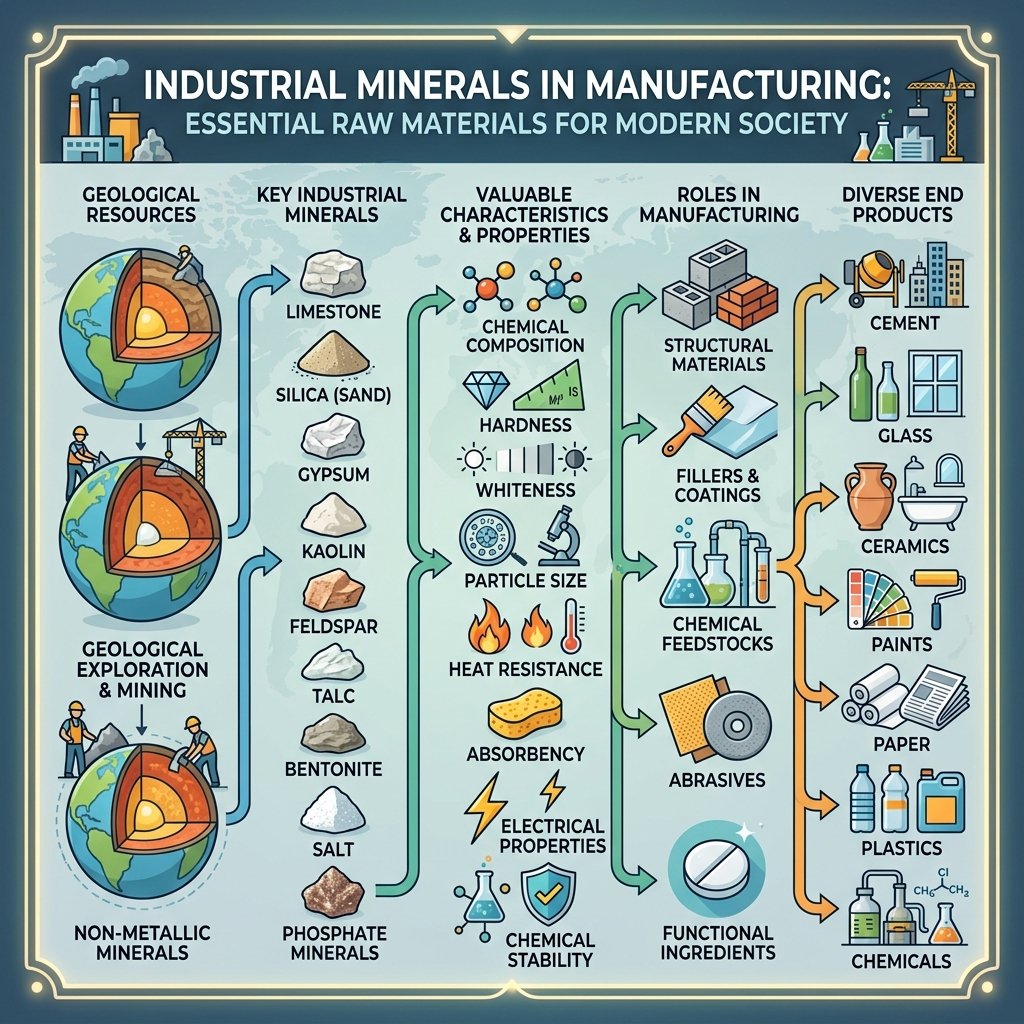
Industrial Minerals in Manufacturing are essential raw materials used to produce many of the materials and products that support modern society. Minerals such as limestone, silica, gypsum, kaolin, feldspar, talc, bentonite, salt, and phosphate minerals provide specific physical and chemical properties required by manufacturing industries. Unlike metallic ores, which are primarily mined to recover metals,

Industrial Minerals in Manufacturing: Uses and Importance Read More »
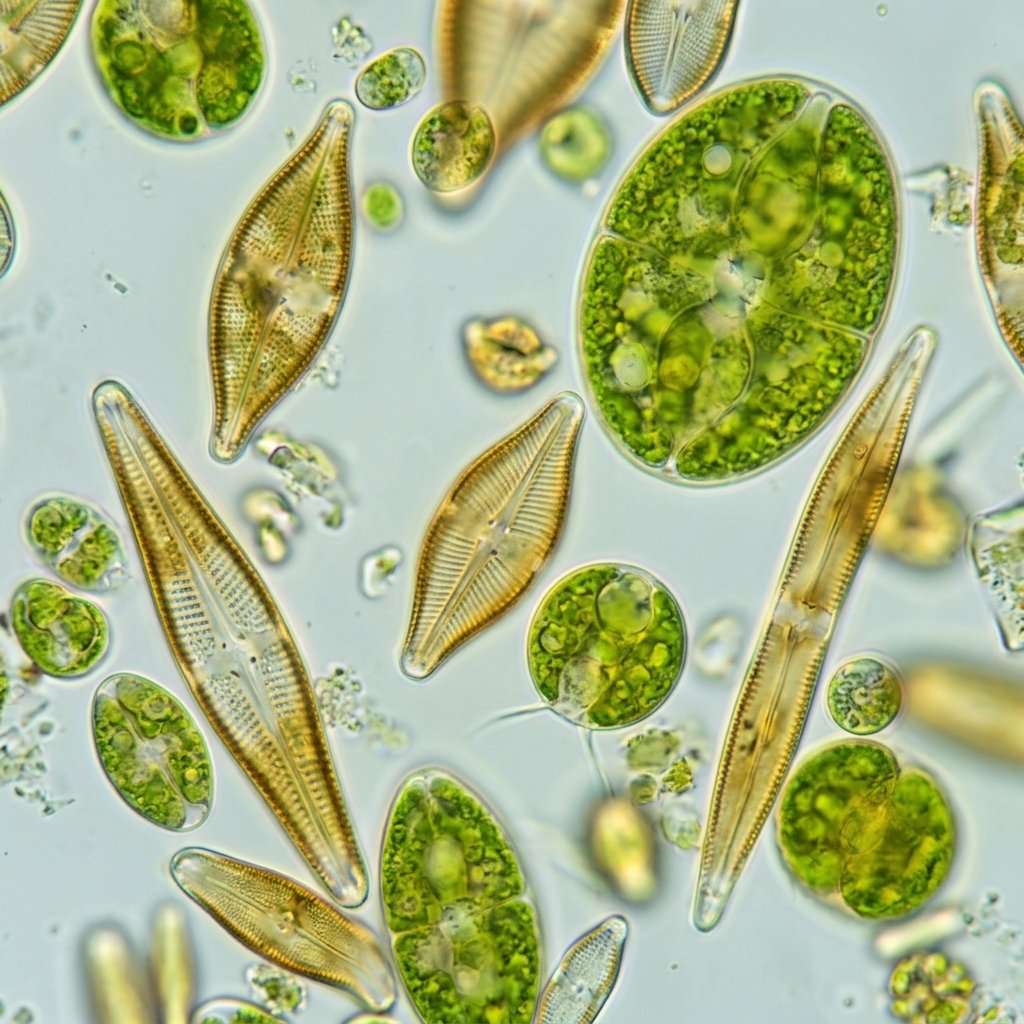
Marine Biotechnology for Biofuels using microalgae and seaweed to produce renewable fuels

Marine Biotechnology for Biofuels Explained

Introduction Marine Biotechnology for Biofuels is an emerging field that combines marine biology, biotechnology, microbiology, chemistry, and engineering to investigate renewable fuels derived from marine biological resources. Microalgae, macroalgae or seaweed, and marine microorganisms contain lipids, carbohydrates, proteins, and other organic compounds that can potentially be transformed into different forms of bioenergy. Scientists are particularly

Marine Biotechnology for Biofuels Explained Read More »

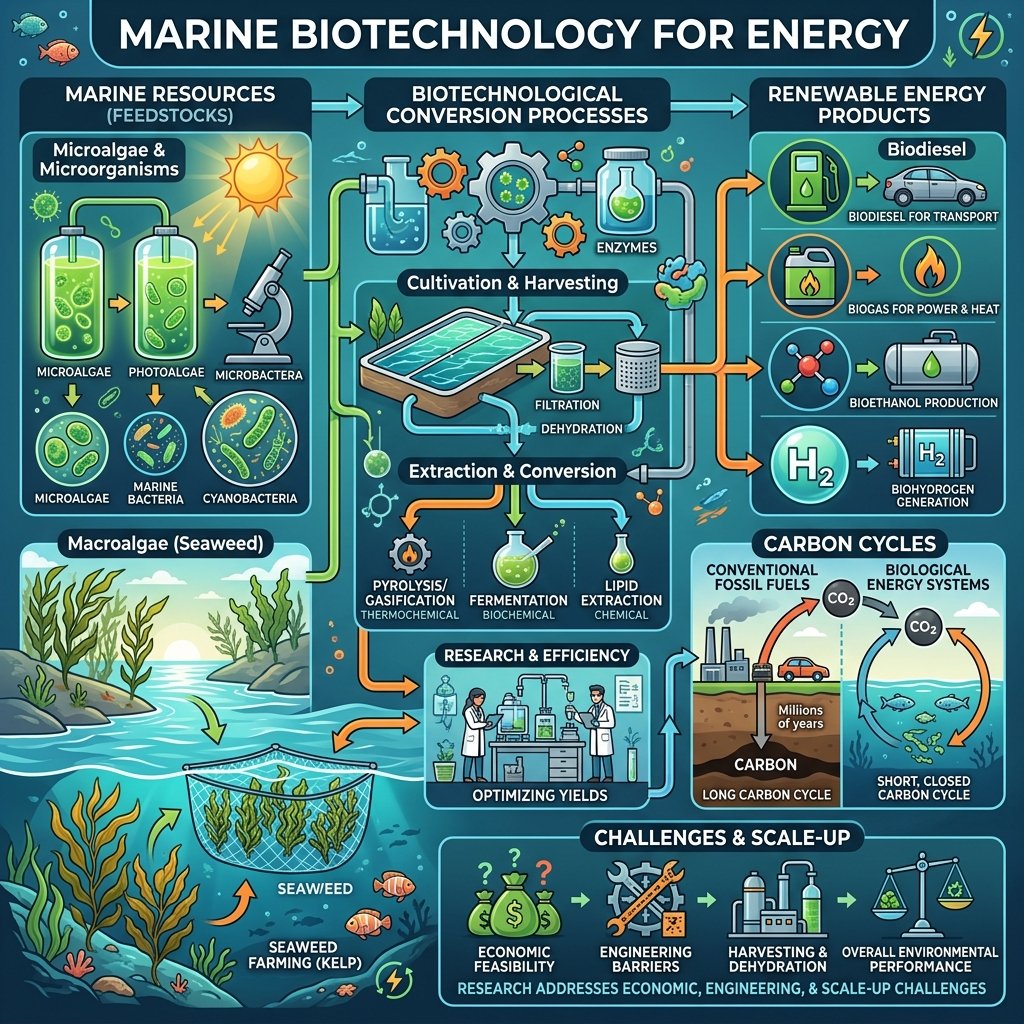
Marine Biotechnology for Energy using algae and marine biomass for renewable biofuel production

Marine Biotechnology for Energy: Future Biofuels

Introduction Marine Biotechnology for Energy is an emerging scientific field that uses marine organisms, biological processes, and biotechnology to investigate new ways of producing renewable fuels and energy products. Microalgae, macroalgae or seaweed, marine bacteria, and other microorganisms contain biological materials that can potentially be converted into biodiesel, biogas, bioethanol, biohydrogen, and other fuels. Innovations

Marine Biotechnology for Energy: Future Biofuels Read More »

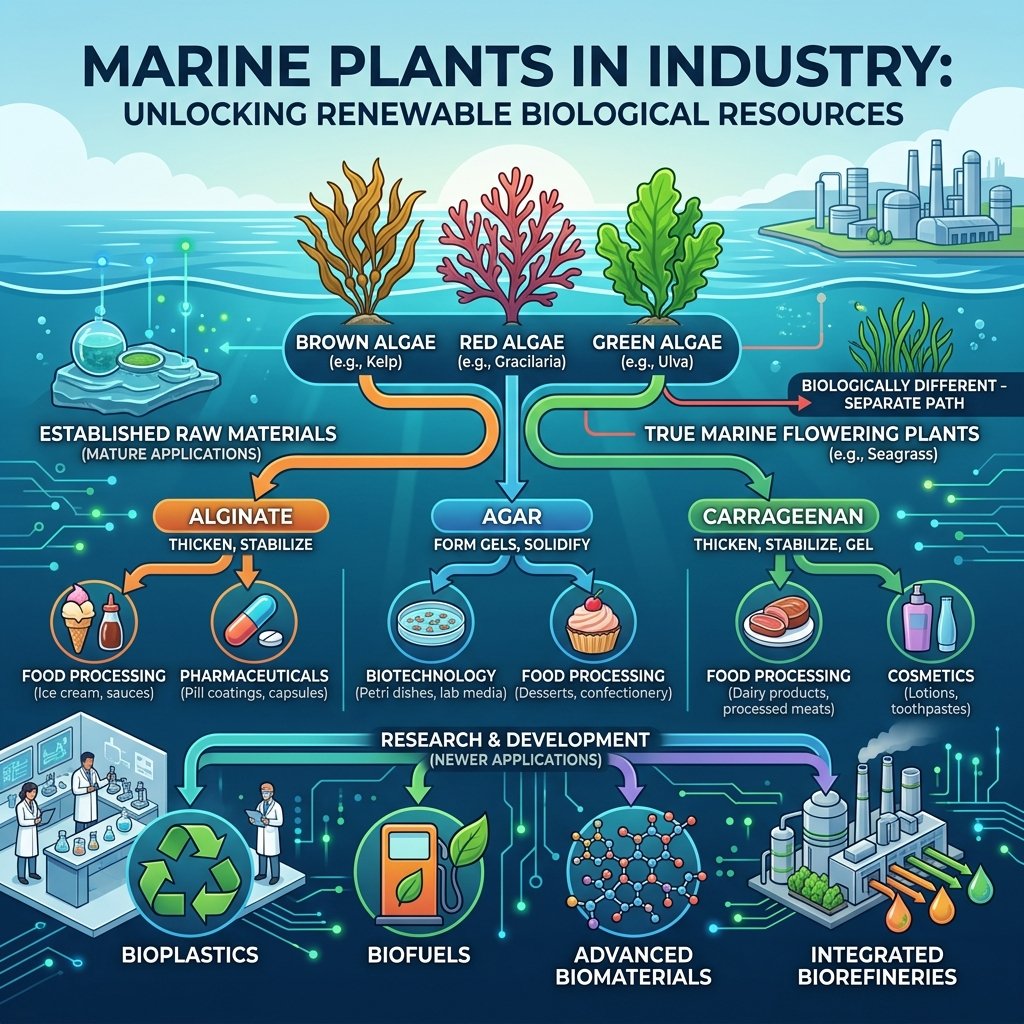
Marine Plants in Industry used for sustainable products and industrial processing

Marine Plants in Industry

Introduction Marine Plants in Industry have become increasingly important as industries search for renewable biological resources that can provide useful chemicals, materials, food ingredients, and other products. In industrial discussions, much of this activity centers on seaweeds, or marine macroalgae, including brown, red, and green groups. Strictly speaking, algae and true marine flowering plants such

Marine Plants in Industry Read More »

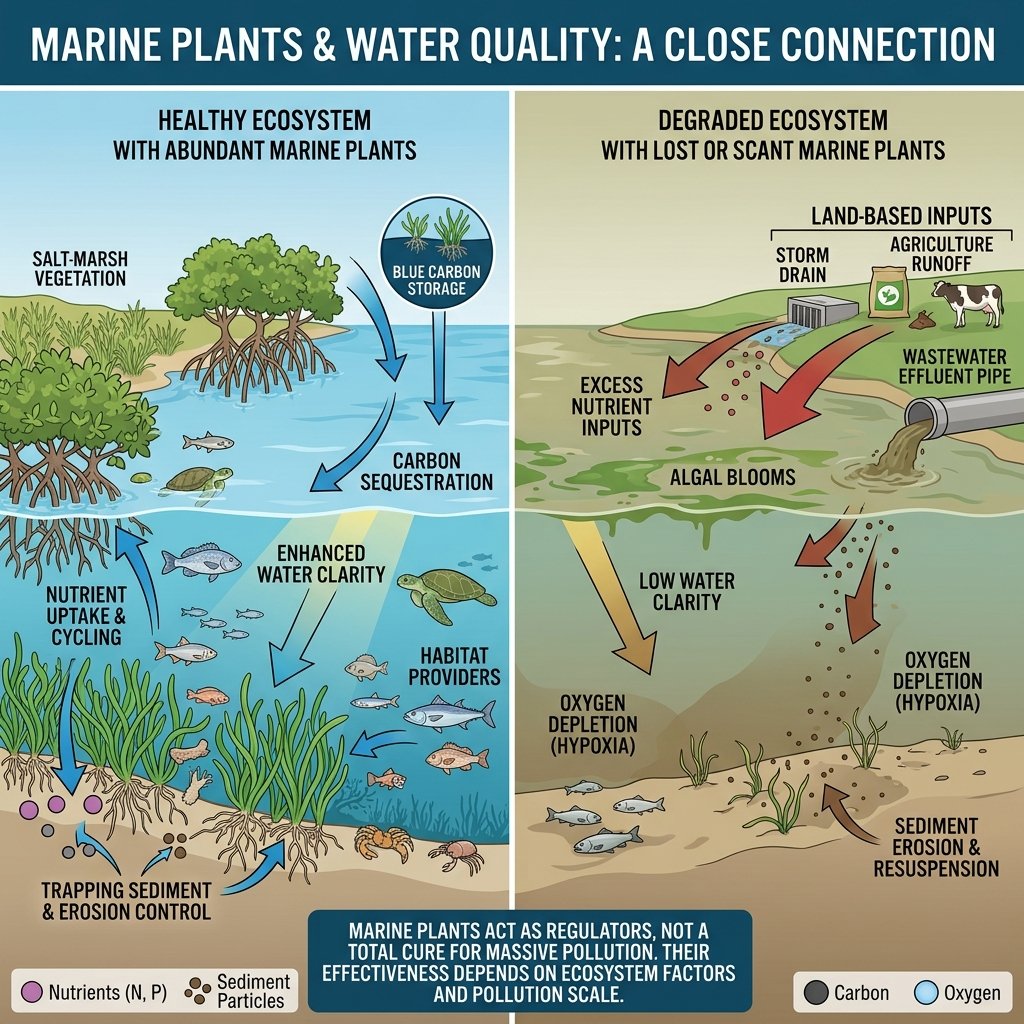
Marine Plants and Water Quality in a healthy coastal marine ecosystem

Marine Plants and Water Quality

Introduction Marine Plants and Water Quality are closely connected because aquatic vegetation plays an important role in maintaining healthy coastal and marine ecosystems. Seagrasses, salt-marsh vegetation, mangroves, and other photosynthetic organisms associated with coastal habitats can influence nutrient cycling, sediment stability, water clarity, carbon storage, and habitat quality. The role of Marine Plants and Water

Marine Plants and Water Quality Read More »

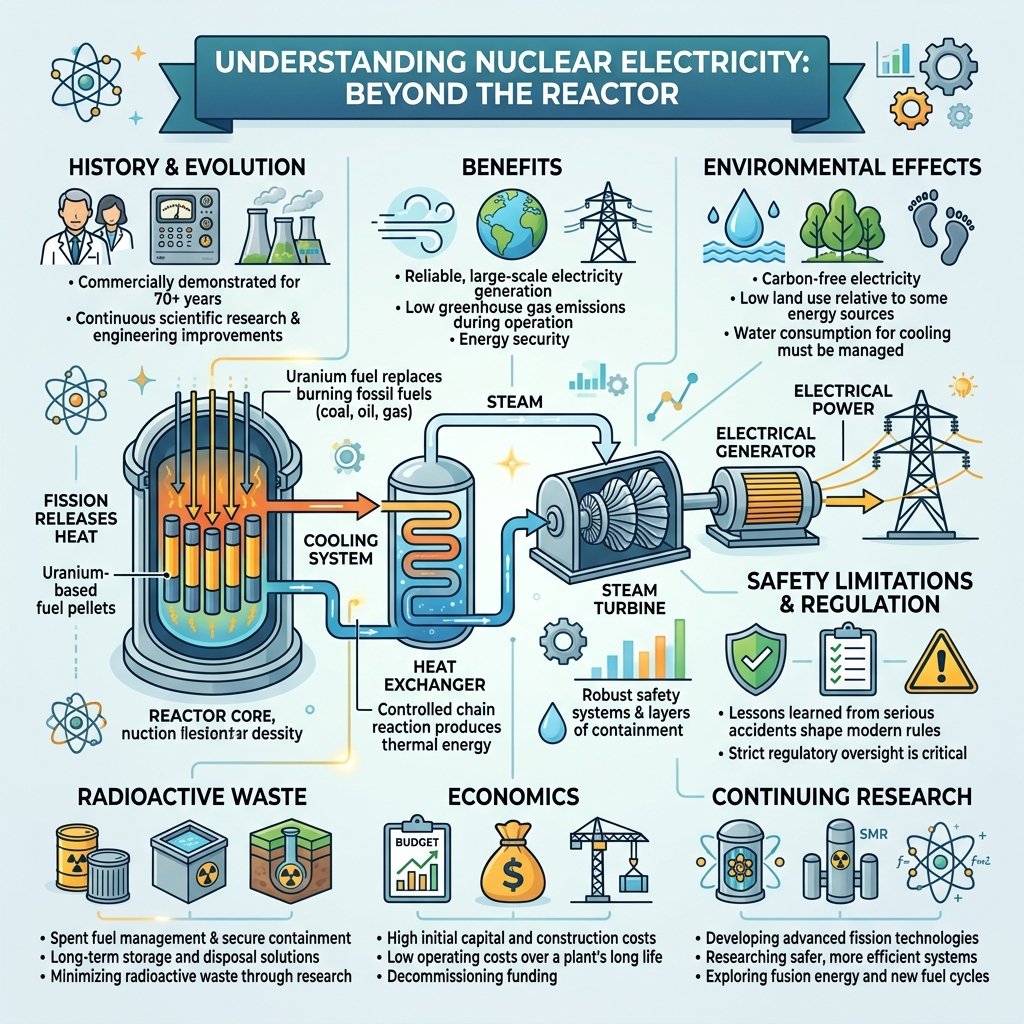
Nuclear Power Plants for Electricity generating power through controlled nuclear fission

Nuclear Power Plants for Electricity Explained

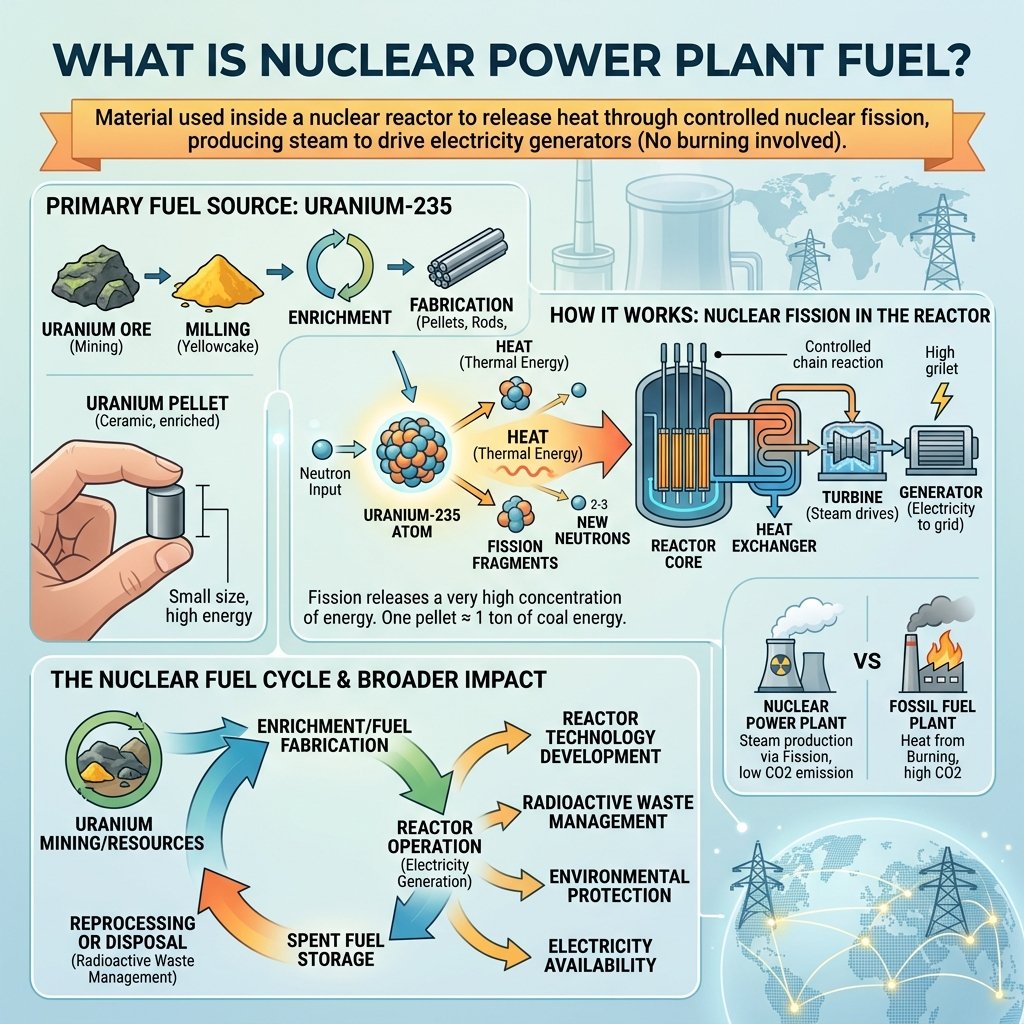
Nuclear Power Plants for Electricity use energy released from controlled nuclear fission to produce heat and ultimately generate electrical power. Instead of burning coal, oil, or natural gas, most commercial nuclear reactors use uranium-based fuel. Inside the reactor, fission releases heat. A cooling system transfers this thermal energy, and in most conventional nuclear plants it

Nuclear Power Plants for Electricity Explained Read More »

Geothermal Energy Resources used for renewable electricity and heating

Geothermal Energy Resources

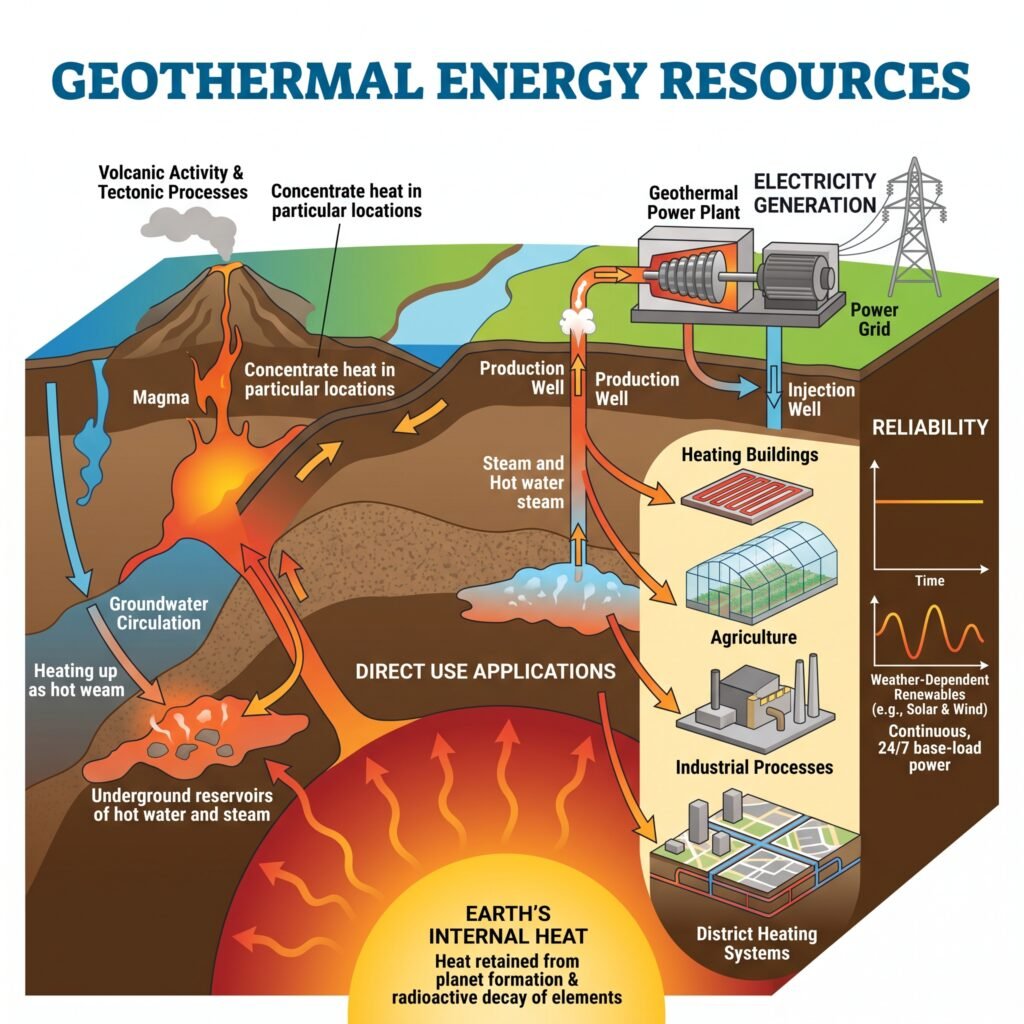
Geothermal Energy Resources are naturally occurring sources of thermal energy stored beneath the Earth’s surface. This heat exists in underground rocks, water, steam, and deeper geological formations. In suitable locations, geothermal resources can be developed to generate electricity, heat buildings, support industrial processes, and provide thermal energy for agriculture and district heating systems. Earth’s internal

Geothermal Energy Resources Read More »

Geothermal Energy Advantages for renewable electricity and sustainable heating

Geothermal Energy Advantages for a Sustainable Future

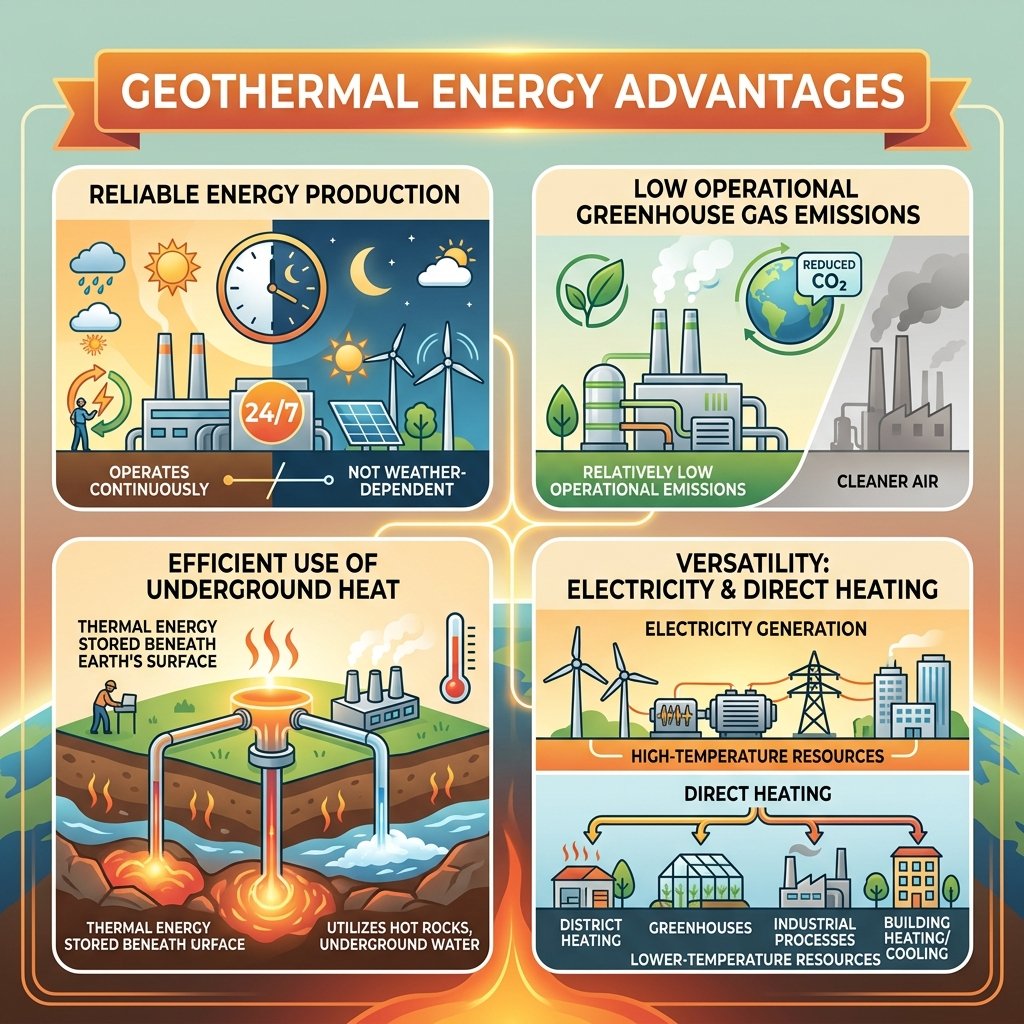
Geothermal Energy Advantages include reliable energy production, relatively low operational greenhouse gas emissions, efficient use of underground heat, and the ability to provide both electricity and direct heating. Geothermal energy uses thermal energy stored beneath the Earth’s surface, where hot rocks, underground water, steam, and geological formations can provide useful energy. Unlike solar and wind

Geothermal Energy Advantages for a Sustainable Future Read More »